
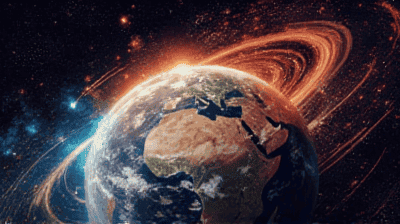
Earth's magnetic field is one of the planet's most important protective mechanisms, shielding us from the harmful effects of solar and cosmic radiation. This invisible force is generated by the movement of molten iron in the Earth's outer core and extends from the Earth's interior out into space. While many people are aware that the magnetic field affects navigation for compasses and certain animals, its role in protecting life on Earth is often overlooked.
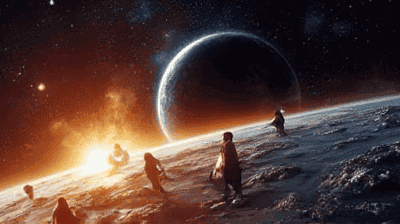
The possibility of extraterrestrial life has fascinated humanity for centuries. From ancient astronomers gazing at distant stars to modern scientists deploying sophisticated telescopes and spacecraft, the quest to discover life beyond Earth is a driving force in contemporary astronomy and astrobiology. Among the many avenues of exploration, the search focuses on promising locations within our solar system and the broader cosmos, ranging from the subsurface oceans of Europa, a moon of Jupiter, to the signals
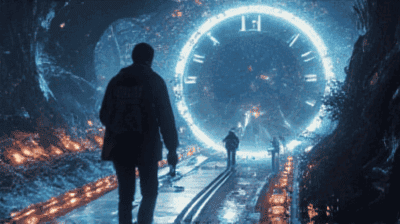
Time travel is a concept that has tantalized humanity for generations. From H.G. Wells' "The Time Machine" to the popular film franchise "Back to the Future," time travel has captivated our imagination, allowing us to ponder the possibilities of visiting the past or exploring the future. But is time travel merely a figment of science fiction, or does it have a basis in scientific theory?

Vaccination represents one of the most effective public health strategies for preventing infectious diseases. The ability of vaccines to stimulate an immune response without causing illness has allowed humanity to combat diseases that were once widespread and deadly.